You have probably had that experience where you reached out to a business, got a reply three days later, and by then you had already moved on. Maybe bought from a competitor. Maybe just lost interest.
Now flip it. You message a business on WhatsApp. Within 10 seconds you get a reply that actually answers your question, offers the next step, and feels like it came from someone who was ready for you. You feel taken care of. You trust the brand a little more. You're more likely to buy.
That second experience is what customer experience automation done right actually feels like. Not robotic. Not cold. Just fast, relevant, and helpful at every step of the journey.
This blog breaks down exactly how automation is reshaping the customer experience, where WhatsApp fits into all of this, and what businesses in India are doing right now to make every customer interaction feel effortless and personal at the same time.
What Customer Experience Automation Really Means
Customer experience is not just about resolving complaints or answering questions. It is the sum of every interaction a person has with your business, from the first time they hear about you to the moment they become a loyal customer and beyond.
Automation, when applied to this journey thoughtfully, does not replace the human element. It handles the parts that humans should not have to do manually because they are repetitive, time-sensitive, or scalable only through technology.
Think about all the touchpoints in a typical customer journey:
Someone discovers your business through an ad. They visit your Instagram or WhatsApp. They have a question. They want a quote. They place an order. They wait for delivery. They receive the product. They might need support. They might want to reorder.
Every single one of these moments is an opportunity to either impress the customer or disappoint them. Automation makes sure the impressive response happens consistently, regardless of what time it is, how busy your team is, or how many customers are reaching out simultaneously.
That is the real role of customer experience automation. Consistency at scale, with speed that humans alone cannot match.
Where Customers Are Expecting You to Show Up
If you have ever waited 24 hours for an email reply from a brand you were excited about, you know how quickly enthusiasm fades. Customers in 2026 do not have patience for slow responses because they have seen that fast responses are possible. They have experienced it. And now they expect it.
The channel where this expectation is highest is WhatsApp.
WhatsApp is where Indians have their most personal, immediate conversations. It is also where they increasingly want to interact with businesses. Not because it is trendy, but because it is the fastest, most natural way to get a response.
When a business shows up on WhatsApp with smart automation, the customer experience feels completely different from any other channel. It feels like talking to a business that actually pays attention. A business that responds when you reach out, follows up when you go quiet, and keeps you informed without you having to chase them.
Messaging is replacing landing pages as the primary engagement surface for exactly this reason. The conversation is the experience now. And automation is what makes that conversation possible at any scale.
The Five Customer Experience Moments Where Automation Makes the Biggest Difference
1. The First Response
The moment someone reaches out is when their interest is highest. Whether they sent a WhatsApp message, commented on an Instagram post, or clicked an ad, the window for a great first impression is seconds, not hours.
Automation handles this instantly. A well-crafted first response that acknowledges the person, answers their initial question, and invites them into the next step of the conversation sets the tone for the entire relationship.
Conversation automation is what makes this first touchpoint feel personal even when it is automated. The key is writing the automated message to sound like a real person who is genuinely glad you reached out, not a bot reading from a script.
2. Lead Qualification and Routing
Not every customer needs the same thing. Some are ready to buy. Some are just exploring. Some need a specific team member or product specialist.
Automation qualifies and routes customers without making them feel like they are filling a support ticket. A smart WhatsApp flow asks the right questions conversationally, figures out what the customer actually needs, and gets them to the right person or information faster than any manual process could.
This reduces frustration on the customer side and saves time on your side. Everyone wins.
3. Order Updates and Transactional Communication
If you have ever ordered something online and kept checking your email for updates, you know how anxious the silence between order and delivery can feel.
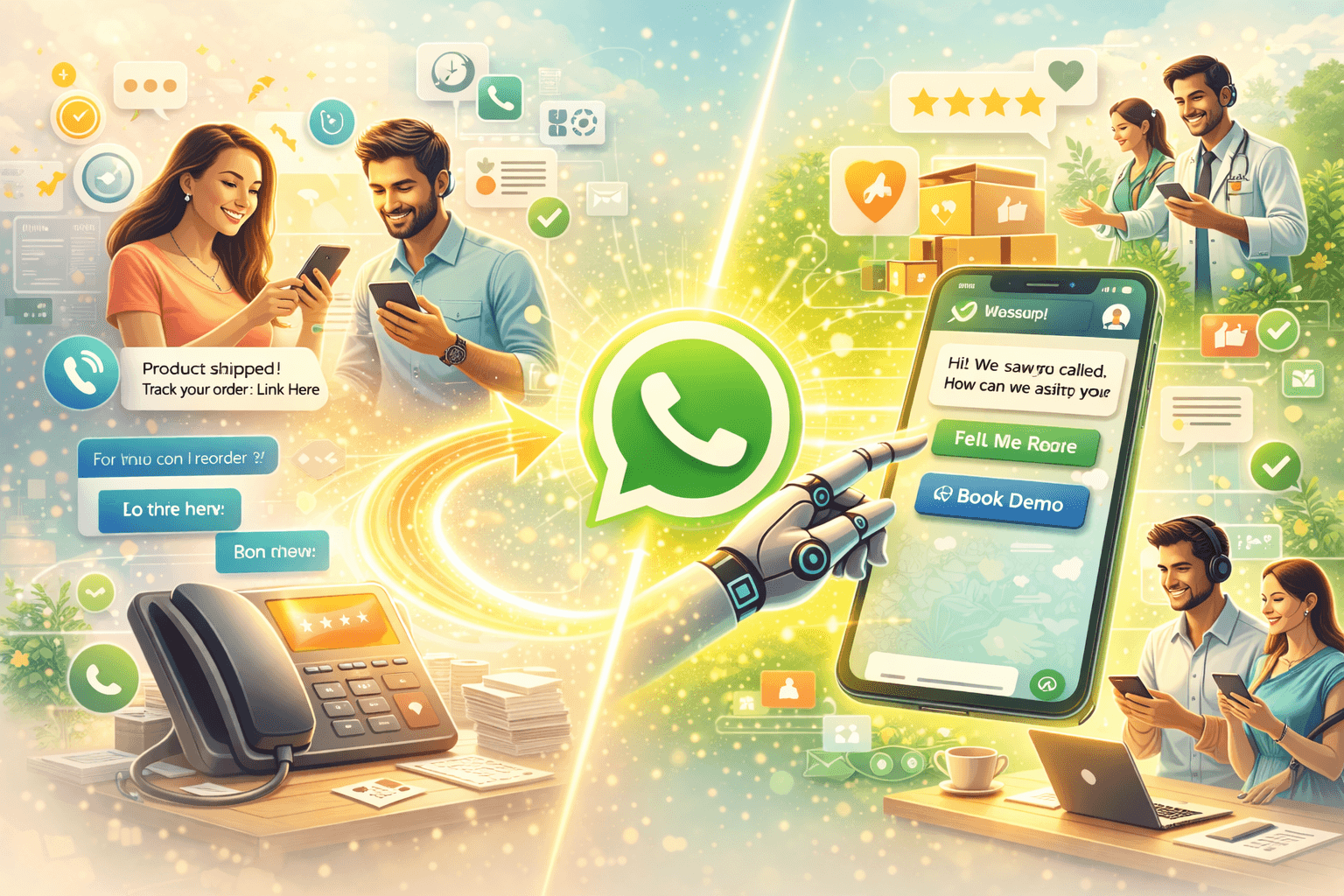
Automated WhatsApp messages for order confirmation, dispatch notification, out for delivery alerts, and delivery confirmation remove that anxiety completely. The customer feels informed at every step without having to reach out and ask.
This is one of the most impactful customer experience improvements a business can make and also one of the easiest to automate. It costs almost nothing and it dramatically increases trust and satisfaction scores.
4. Post-Purchase Follow-Up
The sale is not the end of the customer experience. In many ways it is the beginning of the most important part.
How a business treats a customer after they have paid says everything about whether that customer will come back. An automated WhatsApp message a few days after purchase asking if everything went well, sharing usage tips, or simply saying thank you creates a moment of genuine connection.
This is also the right time to ask for a review, offer a complementary product, or invite the customer into a loyalty program. Automated but thoughtful follow-up is one of the highest ROI activities any business can run.
5. Re-engagement of Dormant Customers
Every business has customers who bought once and then went quiet. Maybe life got in the way. Maybe they forgot. Maybe they just needed a nudge.
WhatsApp broadcast campaigns targeted at dormant customers are one of the most cost-effective ways to bring them back. A well-timed message with a relevant offer or a simple "we miss you" can reactivate customers who would have otherwise been lost forever.
The key is segmentation. A dormant customer who bought six months ago needs a different message than one who bought two weeks ago and has not engaged since. Good automation handles this distinction automatically.
How WhatsApp Engagement Builds Better Customer Relationships
There is something different about WhatsApp as a customer experience channel. It is more intimate than email. More personal than a website chat widget. More immediate than a phone call.
When a business communicates well on WhatsApp, customers feel like they have a direct line. Not to a support queue or a ticket system, but to an actual entity that knows who they are and responds accordingly.
This feeling of directness and familiarity is what drives WhatsApp engagement rates so far above every other channel. Open rates above 90 percent. Reply rates that email marketers would dream about. And a channel where customers actually initiate conversations because they feel comfortable doing so.
For small businesses especially, WhatsApp automation levels the playing field. A boutique store owner using Wasupp can deliver the same instant, personalized response experience as a large e-commerce brand with a full customer support team. The automation does the heavy lifting so the business owner can focus on the parts that actually require a human touch.
The Balance Between Automation and Human Touch
Here is the part a lot of automation guides skip over. Automation should make human interaction better, not eliminate it.
The goal is never to automate everything. The goal is to automate everything that does not need a human, so that when a human does step in, they can give their full attention to the customer without being overwhelmed by volume.
A great customer experience automation setup knows exactly when to hand off. When a customer's question goes beyond the flow. When someone is frustrated and needs empathy. When a deal is complex enough to need a real conversation. These are the moments where a person steps in, equipped with the full context of the automated conversation that happened before them.
This is why messaging-first CRM for Indian businesses matters so much. When every WhatsApp conversation feeds into a CRM automatically, the human who takes over never starts from scratch. They see the full history, they know what the customer asked, they know what was already answered, and they can pick up the conversation as a natural continuation rather than starting over.
That seamlessness is what the best customer experiences feel like from the customer's side. They never feel passed around. They feel heard.
What Good WhatsApp Customer Experience Automation Looks Like in Practice
Let me walk you through how a D2C skincare brand might use this.
A customer sees a reel on Instagram about a new serum. They comment "where can I buy this?" Within seconds, an automated Instagram DM replies with the product link and offers to help them find the right variant for their skin type. Instagram DM automation captures the lead right there in the moment of highest interest.
The customer replies with their skin type. The automation recommends two products and shares a special first-order discount. They buy. An automated WhatsApp message confirms the order. Another one tells them it shipped. A third one arrives three days after delivery asking if they are loving the product and sharing tips on how to use it.
Seven days later, a WhatsApp broadcast sends them a message about a complementary toner that works well with the serum they bought.
None of this required a human to do anything manually. But to the customer, it feels like a brand that genuinely cares about their experience. That is the power of customer experience automation done right.
Automation Is Not Just for Big Businesses
A common misconception is that customer experience automation is something only large companies with big tech budgets can afford.
That is simply not true anymore.
Freelancers use it to manage client communication without spending their entire day on WhatsApp. Small retailers use it to send order updates and collect reviews. Coaching businesses use it to qualify students and book demo sessions. All without a large team or a complicated tech stack.
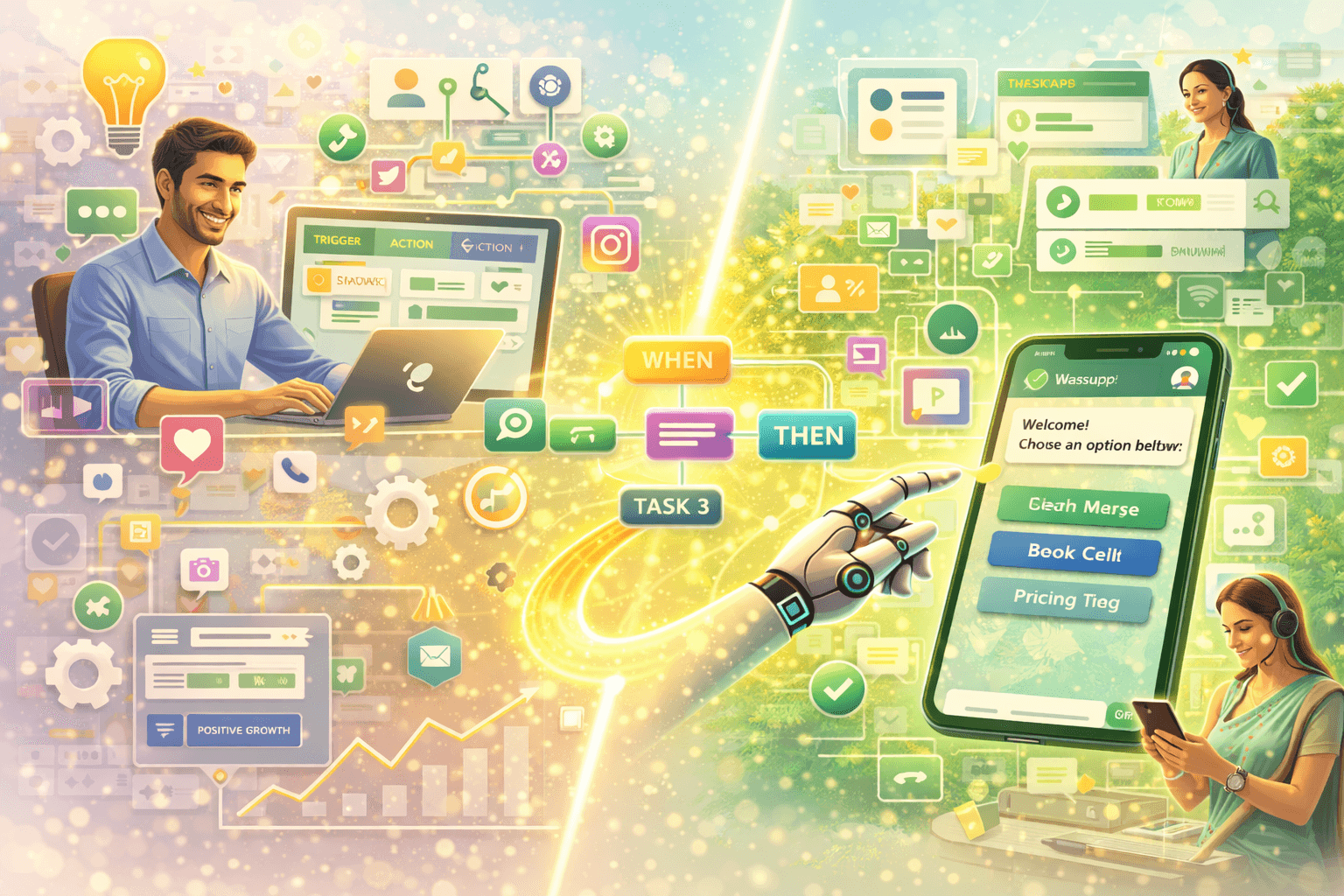
Platforms like Wasupp are built specifically for this. You do not need a developer. You do not need to understand APIs or code. You build your conversation flows visually, connect them to your WhatsApp number, and the automation handles the rest.
If you are trying to figure out whether to start with WhatsApp or Instagram for your customer engagement, this comparison will help you decide based on where your specific customers spend their time.
A Quick Self-Audit: How Is Your Customer Experience Right Now?
Before you start building automation, it helps to know where the gaps are. Ask yourself these questions honestly:
How long does it take to respond to a new inquiry on WhatsApp or Instagram? If the answer is more than five minutes on average, you are losing leads.
Do customers ever reach out asking for an update you should have already sent? If yes, your proactive communication is broken.
How many customers buy once and never come back? If that number is high, your post-purchase experience is not doing its job.
Does your team spend significant time answering the same questions repeatedly? If yes, that is a sign automation can free them up for higher value work.
Every yes to these questions is an automation opportunity. And every automation opportunity is a chance to improve what customers feel when they interact with your business.
FAQs: Automation and Customer Experience
Does automation make customer experience feel less personal?
Only if it is done badly. Automation that uses the customer's name, references their specific situation, and communicates in a warm human tone feels personal. The speed and consistency actually make customers feel more valued, not less.
What is the first automation a business should set up for customer experience?
The first response automation. Whatever channel your customers use most, whether WhatsApp or Instagram, make sure every inquiry gets an instant, helpful reply. This single change has more impact on customer experience than almost anything else.
Can automation handle customer complaints?
Automation can acknowledge complaints instantly, gather the details needed to resolve them, and route them to the right team member. The actual resolution usually needs a human. But the instant acknowledgment alone dramatically reduces customer frustration.
How does WhatsApp automation affect customer retention?
Significantly. Customers who receive proactive updates, post-purchase follow-ups, and timely re-engagement messages have higher retention rates. They feel looked after and are more likely to come back and to recommend the business to others.
Is WhatsApp automation suitable for B2B customer experience?
Yes. B2B buyers in India are on WhatsApp just as much as consumers. For B2B businesses, automation can handle inquiry responses, meeting reminders, document sharing, payment follow-ups, and renewal notifications, all on a channel that decision makers actually check.
What role does the WhatsApp Blue Tick play in customer experience?
A verified business profile increases trust immediately. Customers who see a WhatsApp Blue Tick on your business number know they are talking to the legitimate business and not a random number. This reduces hesitation and improves engagement from the very first message.
How do I measure whether my customer experience automation is working?
Track response time, conversation completion rate, lead to conversion rate, customer satisfaction scores, and repeat purchase rate. All of these should improve when automation is working correctly. A good platform like Wasupp gives you dashboards to monitor these metrics across all your automated flows.
The Bottom Line
Customer experience is not a department. It is not a campaign. It is every single interaction a customer has with your business, from the first message to the hundredth.
Automation makes sure those interactions are fast, consistent, and genuinely helpful, even when you are sleeping, in a meeting, or simply overwhelmed with volume.
WhatsApp is where the best customer experience automation happens right now in India. The channel has the reach, the engagement rates, and the conversational nature that makes automation feel human rather than mechanical.
The businesses investing in this now are building something their competitors cannot easily copy: a reputation for being there when it matters.
Ready to build a customer experience that runs on autopilot? Reach out to the Wasupp team and let's set it up for your business