If you've ever felt buried under a pile of customer messages, missed a hot lead because you replied too late, or wished you could clone yourself to handle all those DMs—you're not alone. That's where conversation automation steps in.
Think of it as hiring a super-efficient assistant who never sleeps, never takes a break, and never forgets to follow up. Except this assistant is software, and it's changing how businesses talk to customers in 2026.
Let's break down what conversation automation actually is, why it matters now more than ever, and how it can help your business grow without burning out your team.
What Is Conversation Automation?
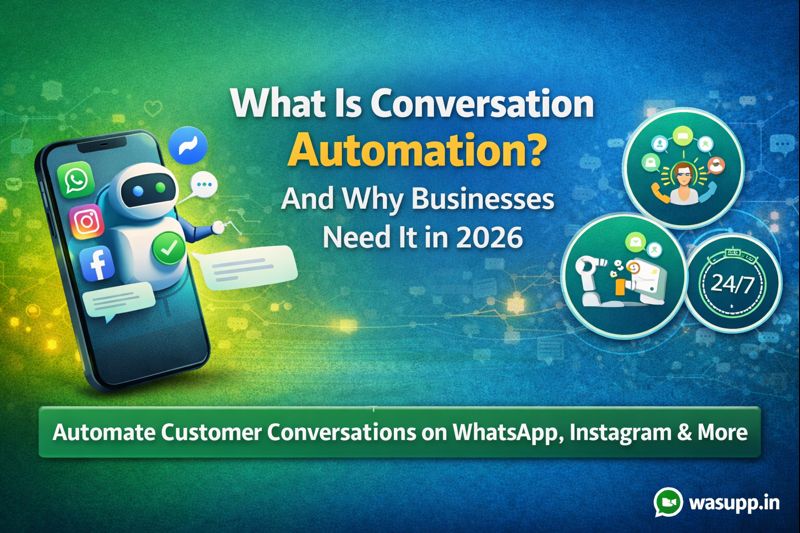
Conversation automation is the use of tools and workflows to automatically handle customer conversations across messaging platforms like WhatsApp, Instagram, Facebook Messenger, and more.
Instead of manually typing every reply, businesses set up smart systems that:
- Send instant responses to common questions
- Qualify leads while you sleep
- Route conversations to the right person
- Follow up with customers automatically
- Collect information without human effort
It's not about replacing humans. It's about letting machines handle the repetitive stuff so your team can focus on conversations that actually need a personal touch.
How Is It Different from Chatbots?
Good question. Chatbots are just one piece of the puzzle. Conversation automation is bigger—it includes chatbots, but also workflows, triggers, integrations with your CRM, scheduled messages, and more.
A chatbot might answer "What are your hours?" But conversation automation can also tag that person as a lead, add them to your CRM, send a follow-up message two days later, and notify your sales team if they're interested.
See the difference? One answers questions. The other builds relationships on autopilot.
Why Businesses Are Going All-In on Messaging Automation in 2026
Let's be honest. Email open rates are dropping. People don't answer calls from unknown numbers. And your website contact form? It's basically a graveyard.
But messaging apps? They're thriving. WhatsApp alone has over 2 billion users worldwide, and India is one of its biggest markets. People are already on these platforms every single day.
Here's why businesses are doubling down on conversation automation right now:
1. Speed Wins Deals
A study found that companies responding within five minutes are 100 times more likely to connect with a lead than those who wait 30 minutes. Most businesses can't reply that fast manually. Automation can.
When someone messages you at 11 PM asking about your product, an automated system can qualify them, collect their details, and book a call—all before you wake up.
2. Customers Expect Instant Replies
Nobody wants to wait. If your competitor replies in 30 seconds and you take 3 hours, guess who gets the sale?
Messaging automation makes sure every inquiry gets acknowledged immediately, even if a human takes over later.
3. You Can't Scale Manual Replies
If you're getting 10 messages a day, fine. You can handle that. But what happens when it's 100? Or 500?
Your team gets overwhelmed. Messages slip through the cracks. Leads go cold.
With automation, you can handle thousands of conversations without hiring dozens of people. At Wasupp, we've seen businesses manage 10x more conversations with the same team size.
4. It Works 24/7
Your business might close at 6 PM, but your customers are thinking about you at midnight. Automation never clocks out.
Whether it's answering FAQs, collecting lead info, or scheduling appointments, your automated workflows keep working while you're off the clock.
What Can You Actually Automate?
Let's get practical. Here's what businesses are automating right now:
Lead Qualification
When someone messages you, automation can ask the right questions to figure out if they're a good fit. Are they interested in your premium service? Do they have the budget? What's their timeline?
Once qualified, the lead gets routed to sales. If not, they go into a nurture sequence.
Customer Support
Most support questions are repetitive. "What are your hours?" "Do you deliver to my area?" "How do I reset my password?"
Automation handles these instantly with pre-set answers. Complex issues? Those get escalated to a human.
Appointment Booking
Stop playing phone tag. Let people book appointments directly through WhatsApp or Instagram DMs. Automation checks availability, confirms the slot, and sends reminders.
Follow-Ups
How many times have you meant to follow up with a lead and forgot? Automation doesn't forget.
You can set up sequences that follow up after 2 days, 5 days, or whenever makes sense—without lifting a finger.
Broadcasts and Campaigns
Want to announce a sale, share a new blog post, or remind people about an event? Automated WhatsApp broadcasts let you reach hundreds or thousands of people in seconds.
Order Updates
Send order confirmations, shipping updates, and delivery notifications automatically. Keeps customers happy and reduces "Where's my order?" messages.
Real-World Example: How a Small Business Uses Conversation Automation
Let's say you run a boutique fitness studio in Bangalore. Before automation, your process looked like this:
- Someone DMs you on Instagram asking about membership
- You're in the middle of a class, so you see it 2 hours later
- You reply manually
- They ask more questions
- You go back and forth 10 times
- Maybe they sign up. Maybe they ghost you.
With conversation automation, here's what happens:
- Someone DMs you
- Automation instantly replies: "Hey! Would you like to know about our membership plans or book a free trial class?"
- They pick an option
- Automation collects their name, phone number, and preferred time
- Books the trial class automatically
- Sends a confirmation and reminder
- Your team gets a notification with all their details
You saved 20 minutes. They got instant service. Everyone's happy.
Common Myths About Messaging Automation
"It feels robotic and impersonal" Not if you set it up right. Good automation sounds human. Add personality, use natural language, and know when to hand off to a real person.
"It's too complicated to set up" It used to be. Not anymore. Platforms like Wasupp make it simple with visual workflow builders. No coding needed.
"My customers won't like talking to a bot" They don't care if it's a bot or a human—they care about getting help fast. If automation solves their problem in 30 seconds, they'll love it.
"It's only for big companies" Wrong. Small businesses actually benefit more because they're usually stretched thin. Automation levels the playing field.
How to Get Started with Conversation Automation
You don't need to automate everything at once. Start small and build from there.
Step 1: Pick One Platform
Don't try to be everywhere. If your customers are on WhatsApp, start there. Instagram? Focus on DM automation. Pick your strongest channel.
Step 2: Identify Repetitive Tasks
What questions do you answer over and over? What tasks eat up your team's time? Those are your first automation targets.
Step 3: Map Out Simple Workflows
Start with basics:
- Auto-reply to new messages
- Collect contact info
- Answer FAQs
- Route urgent issues to a human
Step 4: Choose the Right Tool
You need a platform that connects to your messaging apps and lets you build workflows easily. Look for features like CRM integration, analytics, and multi-channel support.
At Wasupp, we built our platform specifically for businesses that want to automate conversations without the tech headaches.
Step 5: Test and Improve
Launch your automation, watch how people respond, and tweak it. Maybe your questions are too long. Maybe you need more response options. Treat it like a living system.
The Bottom Line
Conversation automation isn't some futuristic fantasy. It's happening right now, and businesses that embrace it are leaving their competitors in the dust.
You can't be online 24/7. You can't reply instantly to every message. You can't remember to follow up with every lead. But automation can.
It's not about replacing human connection. It's about making sure you never miss a chance to connect in the first place.
If you're tired of dropping leads, drowning in messages, or working till midnight just to keep up—it's time to automate.
Ready to see what conversation automation can do for your business? Get in touch with us and let's build something that works while you sleep.
FAQs
What is conversation automation?
Conversation automation uses software to handle customer messages automatically across platforms like WhatsApp, Instagram, and Facebook. It includes chatbots, workflows, and integrations that respond, qualify leads, and route conversations without manual effort.
Is conversation automation the same as a chatbot?
Not exactly. Chatbots are part of conversation automation, but automation also includes workflows, triggers, CRM integrations, scheduled messages, and more. It's a complete system, not just a bot.
Which businesses benefit most from messaging automation?
Any business that gets customer messages can benefit—especially small businesses, e-commerce stores, service providers, real estate agents, fitness studios, and consultants. If you're handling inquiries manually, automation can save you hours.
Does automation make conversations feel robotic?
Only if it's set up poorly. Good automation uses natural language, adds personality, and knows when to hand off to a human. Most customers don't mind automation as long as it solves their problem quickly.
How much does conversation automation cost?
It depends on the platform and features you need. Some tools charge per conversation or per user. Others have flat monthly rates. The good news? Even small businesses can afford basic automation, and the time saved usually pays for itself.
Can I automate WhatsApp messages?
Yes. WhatsApp Business API allows automation through approved platforms. You can send auto-replies, broadcasts, order updates, and more—all within WhatsApp's guidelines.
Do I need coding skills to set up automation?
Nope. Most modern platforms use visual builders where you drag and drop to create workflows. If you can use a smartphone, you can set up basic automation.
What happens if automation can't answer a question?
Your system should route complex or unclear questions to a human. Good automation knows its limits and escalates when needed