You spent money and effort acquiring a customer. They bought once. Then they disappeared.
You know repeat customers are more valuable than new ones. Studies show getting an existing customer to buy again is 5-25 times cheaper than acquiring a new one.
But here's the problem: you're so busy chasing new customers that you forget about the ones you already have.
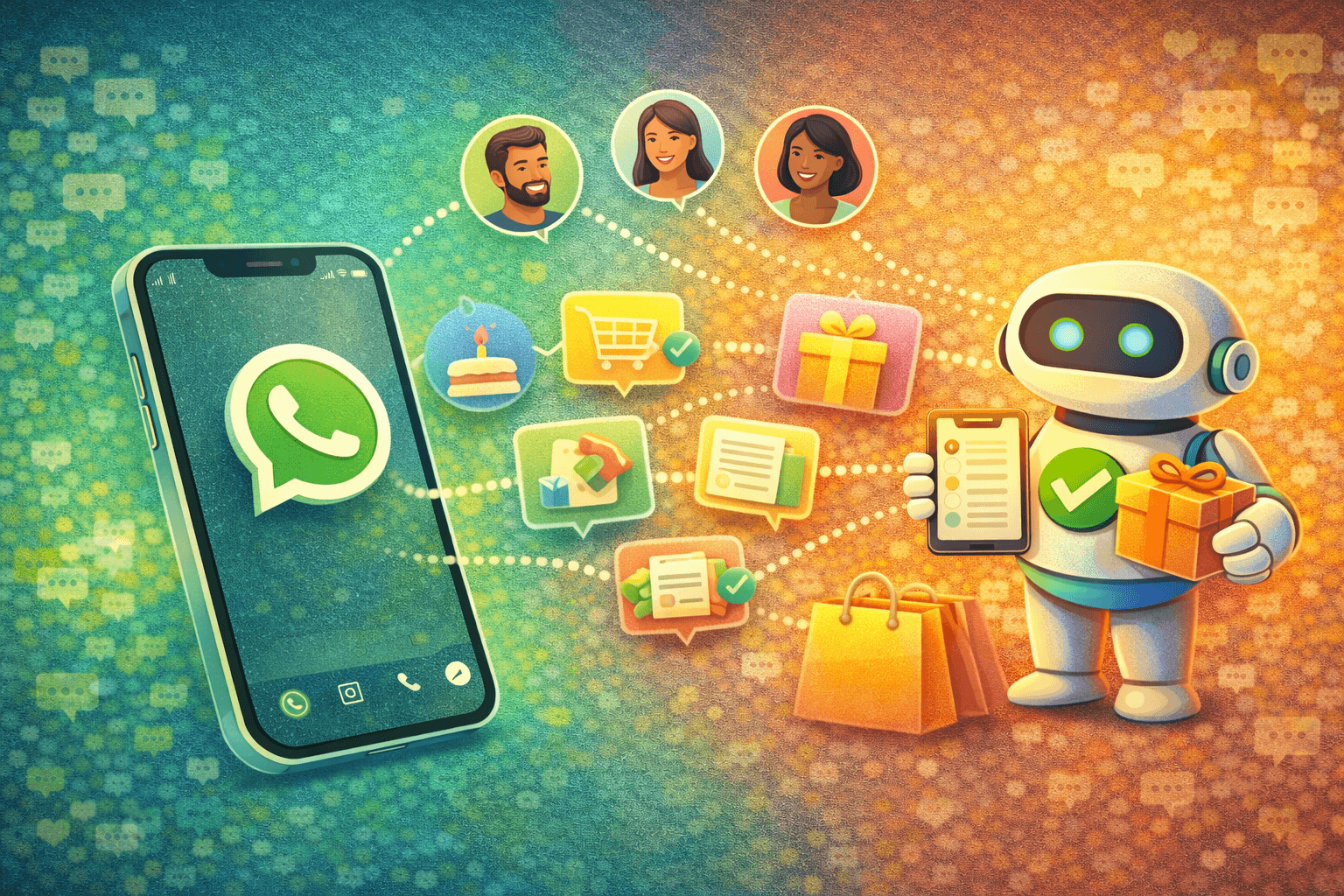
WhatsApp automation solves this. It keeps you connected with existing customers, reminds them you exist, and brings them back for repeat purchases without you manually managing hundreds of relationships.
Let me show you exactly how WhatsApp automation improves customer retention and why businesses using it are seeing 30-50% increases in repeat purchase rates.
Why Customer Retention Matters More Than You Think
Most businesses obsess over getting new customers. Marketing budgets go toward ads, lead generation, and acquisition.
Meanwhile, existing customers who already know you, trust you, and bought from you before get ignored.
The Economics of Retention
Here's what the numbers actually say:
Acquiring a new customer: Costs 5-25x more than retaining an existing one
Probability of selling to existing customer: 60-70%
Probability of selling to new prospect: 5-20%
Revenue impact: Increasing retention by just 5% can increase profits by 25-95%
The math is clear. Retention is where the money is.
Why Customers Don't Come Back
It's not always because they're unhappy. Often, they just forget about you.
They bought from you six months ago. Life got busy. They moved on. When they need what you sell again, you're not top of mind, so they go to whoever they see first.
Out of sight, out of mind.
How WhatsApp Automation Keeps You Top-of-Mind
This is where automation changes everything. You can stay connected with hundreds or thousands of customers without manually messaging each one.
Post-Purchase Follow-Up Sequences
Someone buys from you. Automation kicks in immediately.
Day 1 (Purchase): "Hey [Name]! Your order is confirmed. Order #[number]. You should receive it by [date]. Excited for you to try it!"
Day 3 (After Delivery): "Hi [Name]! Your order should have arrived. Everything good? Let me know if you need anything."
Week 2 (Usage Check-In): "Hey! How's the [product] working out for you? Any questions or feedback?"
Month 1 (Replenishment Reminder for Consumables): "Hi [Name]! If you've been using your [product] daily, you're probably running low. Want to reorder? Here's your personal link: [link]"
All automated. The customer feels cared for. You didn't have to manually remember to check in.
Birthday and Anniversary Messages
Automation tracks customer birthdays (if you collected that data) or purchase anniversaries.
On their birthday: "Happy birthday [Name]! Here's a special 20% discount code just for you: BDAY20. Valid for 7 days."
On purchase anniversary: "Can you believe it's been a year since you first shopped with us? Thanks for being awesome. Here's 15% off your next order."
These personal touches make customers feel valued, not like just another transaction.
Abandoned Cart Recovery
Someone added items to cart but didn't complete purchase. Automation follows up:
2 hours later: "Hey! Noticed you were checking out [product]. Still interested? Here's your cart: [link]"
24 hours later: "Don't want to be pushy, but that [product] is still waiting for you. Need help deciding? Any questions I can answer?"
3 days later: "Last reminder about your cart. If price is the issue, here's 10% off to help you decide: [code]"
Studies show abandoned cart automation recovers 10-30% of lost sales.
Re-Engagement Campaigns for Dormant Customers
Someone hasn't purchased in 90 days. Automation detects this and reaches out:
"Hey [Name]! Haven't seen you in a while. Miss you! Here's what's new: [brief update]. Want to check it out?"
Or offer a "we miss you" discount to incentivize coming back.
You're actively preventing churn instead of just watching customers fade away.
Loyalty Program Updates
If you have a loyalty or rewards program, automation keeps customers informed:
"Hi [Name]! You just earned 500 points. You're only 200 points away from a free [reward]. Here's what you can redeem now: [link]"
Gamification through points keeps customers engaged and coming back to hit the next milestone.
Exclusive Early Access
Make existing customers feel special by giving them first access to new products:
"[Name], you're one of our VIPs. We're launching [new product] next week, but you get early access today. Check it out before everyone else: [link]"
Customers love feeling like insiders. This strengthens emotional connection to your brand.
Real Example: Beauty Brand Increases Repeat Purchases by 43%
Let me show you how this works in practice.
Glow & Co sells skincare products online in India. Before automation, their customer retention was terrible.
Before WhatsApp Automation
Repeat purchase rate: 18% (most customers bought once and never returned)
Average customer lifetime value: 1,200 rupees (basically one purchase)
Customer communication: Only during sales or if customer reached out with issues
Problem: Customers forgot about the brand after first purchase
After Implementing WhatsApp Automation
They set up several retention workflows:
1. Post-Purchase Care:
- Delivery confirmation
- Usage tips (how to apply the product)
- Check-in after 1 week
- Replenishment reminder after 30 days (most products last 30-45 days)
2. Educational Content:
- Weekly skincare tips via WhatsApp broadcast
- How to layer products
- Seasonal skincare advice
3. Personalized Recommendations:
- Based on first purchase, suggest complementary products
- "You bought moisturizer. Most customers also love our serum with it."
4. VIP Treatment:
- Early access to new launches for repeat customers
- Birthday discounts
- Exclusive deals for customers who bought 3+ times
Results After 6 Months
Repeat purchase rate: 61% (customers buying 2+ times)
Average customer lifetime value: 4,800 rupees (customers buying 4-5 times on average)
Customer engagement: 72% of customers actively engage with WhatsApp messages
Retention: Customers who receive automated follow-ups are 3.2x more likely to make a second purchase
Same products. Same pricing. Just better communication through automation.
Specific WhatsApp Automation Workflows That Boost Retention
Let's get into the tactical workflows you can implement.
Workflow 1: The Welcome Series for New Customers
Trigger: First purchase
Sequence:
- Day 0: Order confirmation + thank you
- Day 2: Delivery update
- Day 5: "How is everything?" check-in
- Day 10: Educational content about product usage
- Day 20: Request for review/testimonial
- Day 30: Suggest complementary product or offer discount on next purchase
Goal: Convert one-time buyer into engaged customer
Workflow 2: The Replenishment Reminder
Trigger: 30-45 days after purchase (for consumable products)
Message: "Hi [Name]! If you've been using your [product] regularly, you're probably running out soon. Want to reorder? Quick reorder link: [link]. Same address as last time."
Why it works: Removes friction. Customer doesn't have to remember when they need more or search for where to buy.
Workflow 3: The Win-Back Campaign
Trigger: Customer hasn't purchased in 90+ days
Sequence:
- Day 90: "We miss you!" message with update on new products
- Day 100: Offer 15% discount code as incentive
- Day 120: Last attempt with case study or testimonial from similar customer
Goal: Re-engage dormant customers before they're completely lost
Workflow 4: The Referral Incentive
Trigger: After second purchase (loyal enough to refer)
Message: "Hey [Name]! Since you love our products, want to share the love? Refer a friend and you both get 20% off. Here's your unique referral link: [link]"
Why it works: You're acquiring new customers through existing happy customers (lower acquisition cost) while rewarding loyalty
Workflow 5: The Feedback Loop
Trigger: 7-10 days after product delivery
Message: "Hi [Name]! Quick question: How would you rate your experience with us? Reply with 1-5 stars."
Follow-up based on rating:
- 4-5 stars: "Awesome! Would you mind leaving a quick review here? [link]"
- 1-3 stars: "Oh no! What went wrong? Let me make this right for you."
Why it works: Shows you care about their experience, catches problems early, generates reviews
Workflow 6: The Seasonal Relevance
Trigger: Seasonal dates (festivals, holidays, weather changes)
Example for Diwali: "[Name], Diwali is in 2 weeks! We're running a festive sale. As a valued customer, you get early access: [link]. Plus free gift wrapping!"
Why it works: Capitalizes on buying intent during high-spend periods
How to Measure If Your Retention Automation Is Working
You can't improve what you don't measure. Track these metrics:
Repeat Purchase Rate
Formula: (Number of customers who bought 2+ times) / (Total customers) x 100
Target: Aim for 30-40% minimum. Great brands hit 50-60%.
How automation helps: Automated follow-ups and reminders directly increase this number.
Customer Lifetime Value (CLV)
Formula: Average purchase value x Number of purchases x Average customer lifespan
Target: Should increase month-over-month as retention improves
How automation helps: More purchases over longer period = higher CLV
Time Between Purchases
Metric: Average days between first and second purchase
Target: Reduce this number through timely engagement
How automation helps: Replenishment reminders and personalized offers shorten the gap
WhatsApp Engagement Rate
Formula: (Customers who respond to messages) / (Total customers messaged) x 100
Target: 40-60% is good for WhatsApp
How automation helps: Relevant, personalized messages get higher engagement
Churn Rate
Formula: (Customers lost in period) / (Total customers at start of period) x 100
Target: Keep this under 10% monthly
How automation helps: Win-back campaigns catch customers before they churn completely
Common Mistakes That Kill Retention Automation
Mistake 1: Messaging Too Frequently
You send WhatsApp messages daily. Customers get annoyed and block you.
Fix: Space out messages. Once a week for general updates is plenty. Only send more often if highly relevant (order updates, urgent info).
Mistake 2: All Sales, No Value
Every message is "BUY NOW!" or "SALE!"
Customers mute or block you because you're just spamming.
Fix: Follow the 80/20 rule. 80% value (tips, education, helpful info), 20% sales.
Mistake 3: Generic Messages
"Dear Customer, we have a sale."
Customers can tell it's a mass message and ignore it.
Fix: Personalize. Use their name, reference past purchases, segment by customer type.
Mistake 4: Ignoring Responses
Your automation asks "How was your experience?" Customer replies. Nobody responds.
That's worse than not asking at all.
Fix: Have humans monitor and respond to feedback. Automation starts conversation, humans maintain it.
Mistake 5: No Clear Opt-Out
Customers want to stop receiving messages but can't figure out how. They just block your number.
Fix: Include "Reply STOP to unsubscribe" in all broadcast messages. Respect opt-outs immediately.
Setting Up Retention Automation Step-by-Step
Here's how to actually implement this:
Step 1: Segment Your Customer Base
Don't treat all customers the same. Segment by:
- Number of purchases (1-time vs repeat)
- Last purchase date (active vs dormant)
- Product category purchased
- Total spend (VIP vs regular)
Different segments need different messages.
Step 2: Map the Customer Journey
Write out what happens after first purchase:
- Day 1-7: What do they need?
- Week 2-4: What support would help?
- Month 2+: How do you keep them engaged?
Identify key touchpoints where communication would add value.